
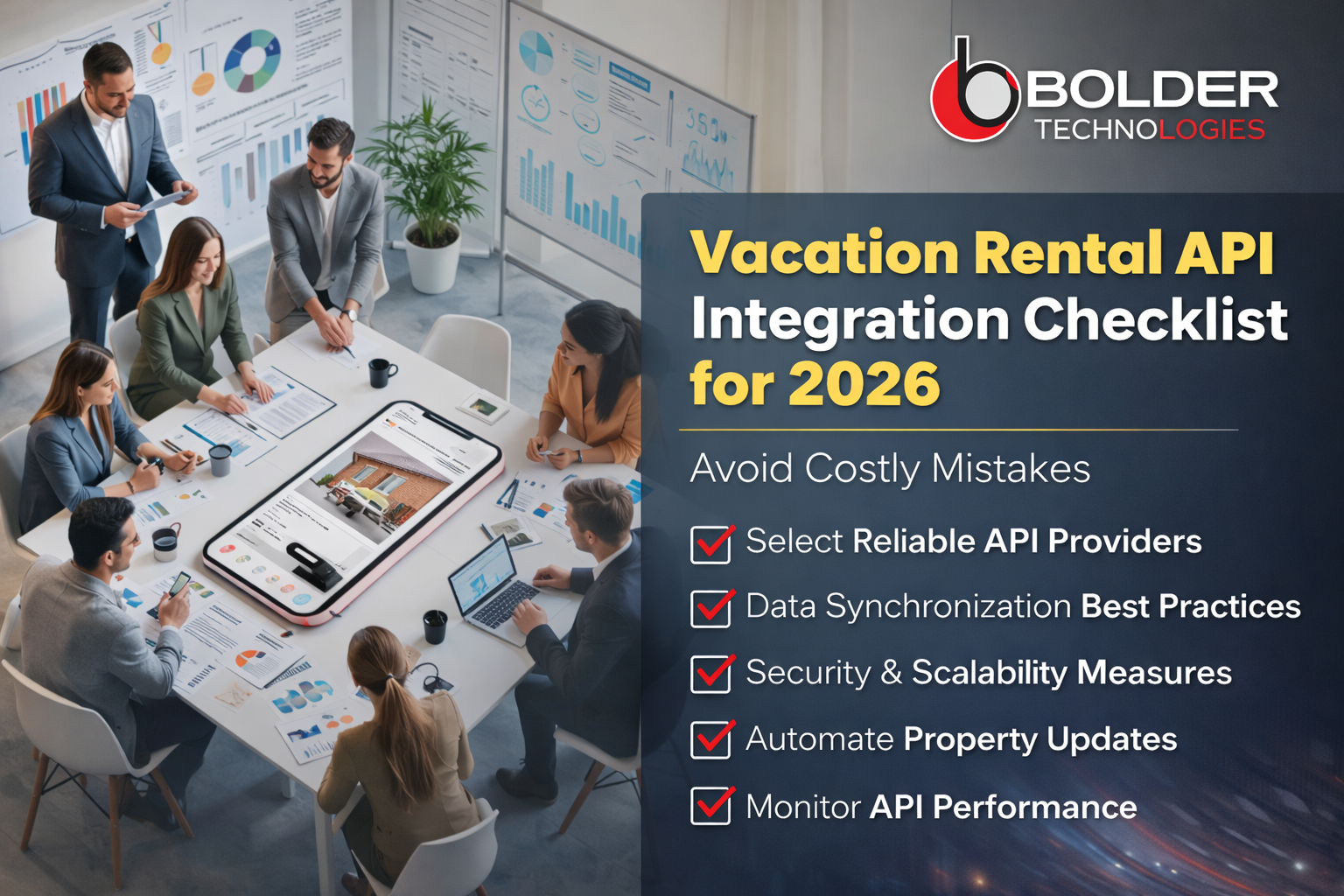
You’ve probably heard that tech integrations can make or break your vacation rental business. That’s true, but only if you do them smartly. In 2026, consumer expectations aren’t just about having listings on Airbnb or Booking.com. Guests want instant updates, accurate availability, seamless payments, and responsive communication. And behind all of that is a tangle of tech from API connections to booking engine APIs and advanced short-term rental automation.
But how do you go from chaos to confidence without burning time or money? You need a real API integration checklist, one that keeps your operations smooth, your revenue flowing, and your headaches far away. Let’s build that checklist together.
Step 1: Clarify Your Integration Strategy Before You Write a Single Line of Code
Before touching API keys or endpoints, take a step back and look at the business side of your setup. Think about which systems truly need instant synchronization, such as reservations, pricing, and guest information, and identify the platforms that directly drive bookings and revenue. Pay close attention to areas where manual work is creating errors or slowing your team down, because those friction points often signal where automation will have the biggest impact. This kind of business-first thinking ensures your vacation rental API integration isn’t just a technical exercise but a strategic move designed to support growth.
Start by defining clear outcomes, such as eliminating double bookings, maintaining real-time pricing across OTAs, creating a single flow for guest communication, and reducing time spent on repetitive administrative tasks. When goals are clear, every integration decision becomes easier and far more effective.
Step 2: Match Each API to a Clear Business Need
Not all APIs are created equal, and not every API will serve your goals. Here are the main types you’ll be working with:
- PMS API integration — Syncs your core property management software with third-party tools and OTAs. This is your integration backbone.
- Channel manager API — Keeps rates and availability accurate across all platforms and prevents double bookings.
- Booking engine API — Powers your website’s direct bookings without redirecting users.
- Property management API — Connects PMS to everything from accounting software to smart locks.
At this stage, map out which system(s) should talk to which other system via APIs. Then list the exact data points that must sync in real time: availability, pricing, reservations, cancellations, guest profiles, upsells, etc.
Step 3: Vet API Documentation and Developer Support
Many vacation rental businesses run into trouble at this stage because they underestimate the importance of developer resources. Strong API documentation makes the difference between a smooth integration and months of costly delays. Look for providers that offer clear and well-structured REST or GraphQL documentation, along with sandbox environments that allow safe testing before anything goes live. Real-time webhooks and notifications are equally important, as they help systems respond instantly to changes without constant polling. Reliable developer support or an active technical community also signals that the platform is stable and well-maintained. When documentation feels confusing or incomplete, it’s usually a warning sign. Poor documentation often leads to integration bugs, unexpected behavior, and higher development costs down the line.
Step 4: Build Your Data Mapping Matrix
This is where the real integration work begins and where many hidden issues are either resolved or quietly introduced. A data mapping matrix defines how information flows between connected systems and ensures that availability, pricing, guest details, and fees remain consistent everywhere they appear. By clearly documenting how data should move, transform, and sync, this step reduces the risk of errors that lead to revenue loss, operational confusion, and guest dissatisfaction. A well-structured matrix keeps your API integration checklist practical and dependable.
Create a spreadsheet that lists:
- All data fields in System A
- All corresponding fields in System B
- Transformation rules such as currency conversions and rate adjustments
- Sync direction, whether uni-directional or bi-directional
- Error handling rules
This step prevents mismatches that lead to costly problems like double bookings or hidden fees.
Step 5: Plan Your Sync Frequency & Failover Strategies
Real-time syncing sounds perfect, but reliable automation requires more than speed alone. You need clear rules for how often systems update, how API call limits are handled, and what happens when a sync fails. Smart retry logic, error alerts, and clear owner notifications keep small issues from turning into major disruptions. The goal is controlled automation that stays calm under pressure, not systems that create panic when something breaks.
Step 6: Run End-to-End Tests Before Launch
Testing is the moment where assumptions meet reality, and it should never be rushed. End-to-end testing confirms that bookings are created and cancelled correctly, pricing updates and overrides behave as expected, and guest profiles move cleanly across connected systems during vacation rental API integration. It also validates OTA channel feeds, booking engine API performance on your website, and mobile interactions if apps are involved. Use real booking scenarios instead of only test data, because real-world behavior exposes issues that controlled environments often miss.
Step 7: Monitor Live Data With KPIs That Matter
After launch, monitoring live data helps you understand whether your integration is actually improving the business or just adding complexity. Focus on KPIs that reflect real outcomes, not just technical activity.
- Rate of failed syncs
This shows how often data updates fail between systems. A rising failure rate often signals API limits, mapping issues, or unstable connections that need immediate attention. - Double booking incidents
Tracking these reveals whether availability syncs are working correctly. Even a small number can damage guest trust and lead to revenue loss. - Revenue per booking
This helps measure whether accurate pricing, upsells, and availability syncing are contributing to higher-value reservations. - Time saved on operations
Reduced manual work indicates successful short-term rental automation and smoother day-to-day management. - API response timings
Slow responses can affect booking speed and data accuracy, especially during high-demand periods.
Step 8: Audit Security & Compliance
API integration doesn’t just move data between systems; it opens access points that must be protected. A secure setup safeguards guest information, protects your business from legal risk, and builds long-term trust. Security should be reviewed as part of the integration itself, not added later as a patch.
Make sure your setup includes:
- Authentication methods such as OAuth or similar secure standards
- Data storage practices that comply with local and global privacy regulations
- Proper logging to track system activity and identify issues
- Rollback capabilities to quickly reverse changes if something goes wrong
Security is no longer optional. Guests expect their data to be handled responsibly, and strong compliance supports that expectation.
Step 10: Review, Improve, Repeat
API integrations are never a one-time setup. Platforms evolve, APIs update, and OTA requirements shift throughout the year. A quarterly review process helps you catch breaking changes, improve performance, and adapt to new channels without disruption. Regular reviews turn integration maintenance into a habit rather than a crisis, helping your systems stay stable, scalable, and aligned with how your business actually operates.
FAQs
What is this integration process, and why does it matter?
It’s the process of connecting your rental management systems, like PMS, channel managers, and booking engines, so they exchange data automatically in real time. A well-planned vacation rental API integration reduces manual work, improves accuracy, and helps prevent costly operational errors.
Do I need an API if I only manage one property?
Even single property owners benefit when APIs help manage bookings, pricing, calendar syncs, and guest information automatically, saving time and reducing avoidable mistakes.
What’s the difference between core system connections and channel syncing tools?
PMS API integration connects your primary management software with the other tools you rely on, while channel-focused connections keep rates and availability aligned across online travel platforms.
How often should systems sync data?
Real-time or near real-time syncing works best for availability and pricing. Less critical data, such as reports, can update less frequently without affecting operations.
Can I test my setup without disrupting live bookings?
Yes. Sandbox environments and staged testing allow you to validate system behavior before going live, ensuring accurate and secure communication between platforms.
Conclusion
Getting API integrations right doesn’t require magic; it requires structure, clarity, and intent. When you follow a well-defined checklist that connects business needs with technical execution, you reduce risk and gain control. A strong vacation rental API integration strategy protects you from calendar chaos, pricing inconsistencies, and guest experience gaps that quietly drain revenue.
Instead of reacting to problems, your systems start working together with purpose. Build this checklist now with 2026 in mind, review it regularly, and treat integration as an ongoing advantage. With the right foundation in place, you can move forward confidently, knowing your tech supports growth rather than slowing it down.
Need Help Integrating APIs?
Let us handle the tech so you can focus on growing your business.
🚀 Book a Free Consultation